
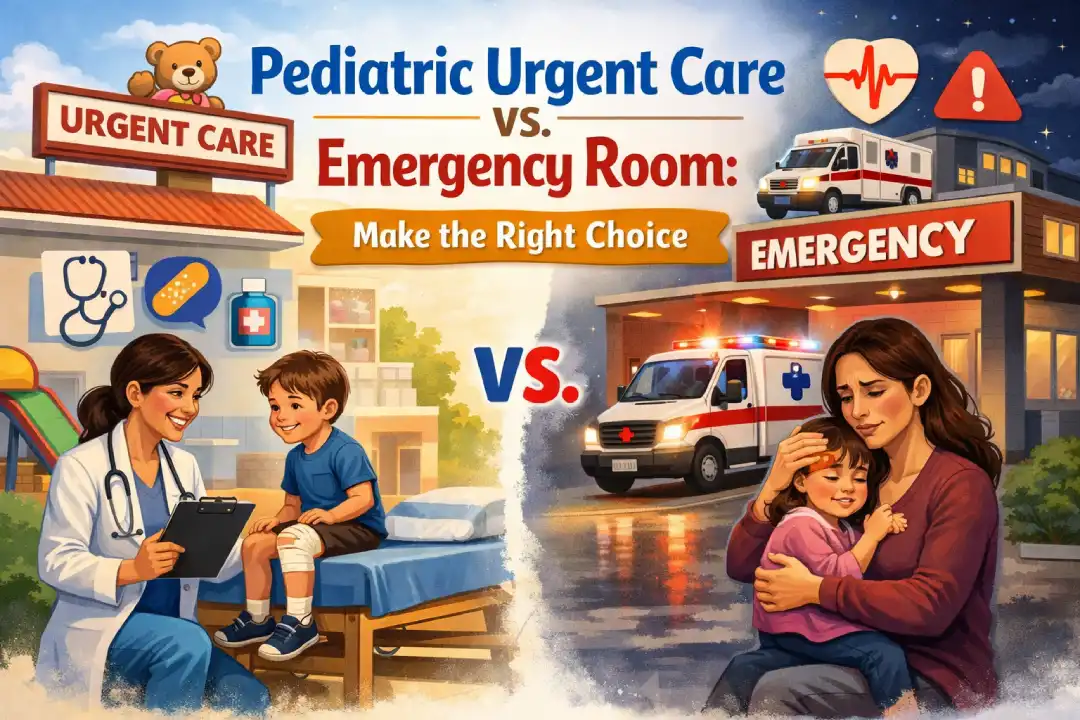
It is 2 AM on a Tuesday, and your toddler has a barky cough and a fever that is climbing. Your stomach knots as you wonder if this is a simple cold or a breathing emergency. In these high-stakes moments, the pressure to choose between the Emergency Room (ER) and Urgent Care feels overwhelming. Making the wrong choice can lead to hours of unnecessary waiting in a crowded hospital or, conversely, not getting enough specialized care for a true crisis. This guide is built to solve that problem for Spokane parents, giving you a clear roadmap so you can act with confidence when your child is hurting. By understanding the specific capabilities of local facilities like Mt. Spokane Pediatrics, you can ensure your child gets the fastest, most effective treatment while avoiding the high costs and stress of a misplaced ER visit.
The Parent’s Dilemma: Knowing Where to Go When Every Minute Counts
In the Inland Northwest, we are lucky to have great medical options, but having too many choices can be confusing during a midnight health scare. Choosing the right care isn’t just about the medical bill; it’s about the “level of acuity,” which is a fancy way of saying how sick your child actually is. Pediatric Urgent Care serves as a middle ground. It handles the things that can’t wait for a scheduled appointment on Monday morning but aren’t life-threatening. The ER, however, is a high-resource environment meant for “life or limb” threats. For families in North Spokane or the Valley, knowing the difference helps keep ER beds open for the most critical cases while getting your child seen quickly at a specialized pediatric clinic.
Reference Checklist: Is it a Medical Emergency?
Before you load the car, take sixty seconds to observe your child’s behavior. Doctors often look at the “Pediatric Assessment Triangle”: appearance, work of breathing, and circulation to the skin. If your child is alert, hydrated, and breathing normally, you usually have time to opt for urgent care. If they are limp, pale, or struggling for every breath, those are “red flags.” Below is a quick checklist of symptoms that require immediate, high-level medical intervention. If you check any of these boxes, skip the clinic and go straight to the nearest pediatric emergency department or call 911.
- Color: Blue, purple, or gray tint to the lips or skin.
- Responsiveness: Cannot be woken up or is acting extremely confused.
- Breathing: Sucking in the skin around the ribs or neck (retractions).
- Physical Trauma: A bone is sticking out or the limb is clearly deformed.
- Severe Bleeding: A wound that won’t stop bleeding after ten minutes of direct pressure.
When to Choose the Pediatric Emergency Room (ER)
The Emergency Room is the highest level of medical care available and is staffed by teams trained to handle life-threatening crises. While an urgent care center is great for minor issues, certain symptoms in children require the advanced diagnostic tools and surgical capabilities found only in a hospital setting. For Spokane parents, knowing these specific “red flags” can save your child’s life. If you notice any of the following, do not wait for a callback from a nurse, head straight to the nearest pediatric emergency department or call 911 immediately.
Critical Respiratory Issues
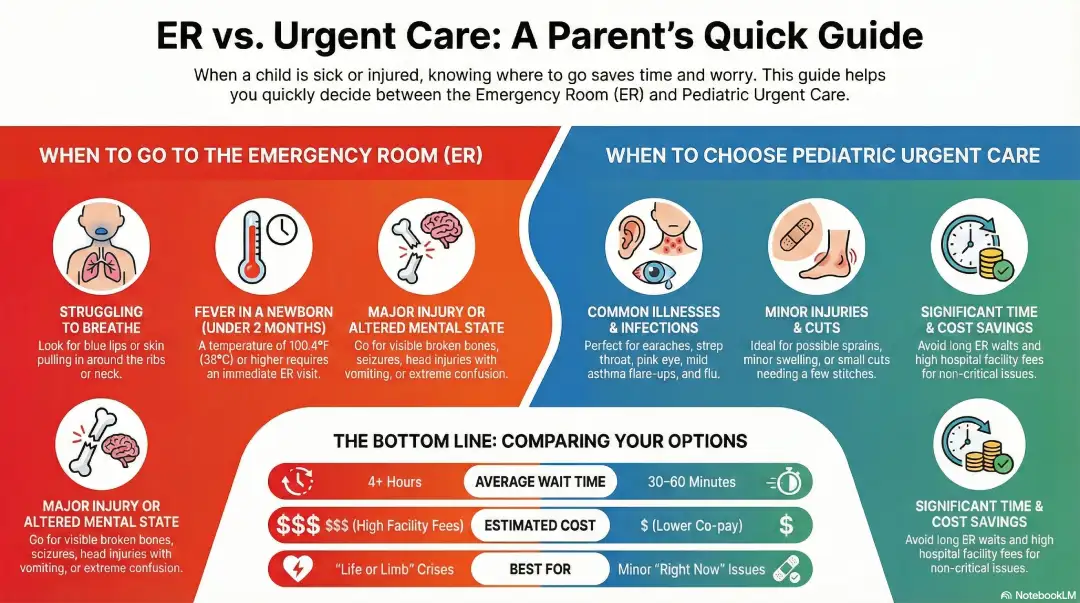
Breathing problems are one of the most common reasons for pediatric ER visits. You should seek emergency care if you see “retractions,” which is when the skin pulls in sharply around the ribs, collarbone, or neck as the child struggles to inhale. Other warning signs include a grunting sound at the end of each breath or a bluish tint to the lips, tongue, or fingernails. These are signs that your child’s oxygen levels are dangerously low and they need immediate respiratory support.
The “Under-2-Month” Fever Rule
In very young infants, a fever is treated with extreme caution. If your baby is under 8 weeks old and has a rectal temperature of 100.4°F (38°C) or higher, it is an automatic ER visit. Newborns have immature immune systems and can become very sick from infections very quickly. Because they cannot tell us where it hurts, the ER staff must perform specific tests to rule out serious bacterial infections that a standard clinic is not equipped to handle.
Neurological Concerns
Any change in your child’s mental state or neurological function is an emergency. This includes a first-time seizure, a seizure that lasts longer than usual, or a sudden loss of consciousness. Head injuries are also a major concern; while a small bump is common, you must go to the ER if your child hit their head and is now persistently vomiting, acting confused, or seems abnormally sleepy and hard to wake up. While sudden seizures require the ER, for ongoing changes in mood or mental state, our on-site pediatric behavioral health support helps families manage long-term neurological and emotional wellness.
Severe Trauma and Poisoning
Major physical injuries require the specialized equipment of an ER. This includes “compound fractures,” where the bone has pierced the skin or the limb is clearly out of place. Deep cuts, especially those on the face that might need sedation for stitches, or wounds with uncontrolled bleeding also fall into this category. Additionally, if you suspect your child has swallowed a “button battery,” a magnet, or any household chemicals, the ER is the only place that can quickly perform the necessary imaging and intervention to prevent internal damage.
When Pediatric Urgent Care is the Smarter Choice
For most childhood mishaps, the “ouchies,” the earaches, and the sudden rashes, Pediatric Urgent Care is actually the superior choice. Places like Spokane Pediatric Urgent Care are designed specifically for kids. They can handle things like strep throat tests, flu swabs, and even minor stitches or staples for cuts. If your child has a painful ear infection, a pink eye flare-up, or a mild asthma attack that isn’t responding perfectly to their inhaler, urgent care offers a much faster turnaround. You avoid the “sickest” patients at the hospital, reducing the chance of picking up another bug, and you get to see providers who spend their entire day working with children’s unique physiology.
ER vs. Urgent Care Comparison
| Symptom / Condition | Seek Pediatric Urgent Care | Seek Emergency Room (ER) |
| Fever | Over 2 months old, acting okay | Under 2 months old (High Priority) |
| Breathing | Mild cough, slight wheeze | Struggling to breathe, blue lips |
| Bones | Possible sprain, minor swelling | Bone visible or limb is bent |
| Cuts | Small cuts, needs a few stitches | Deep wounds, spurting blood |
| Vomiting | Mild, still drinking fluids | Green bile, bloody, or severe pain |
| Head Injury | Minor bump, no loss of consciousness | Passed out, confused, or vomiting |
Critical Comparison: Cost, Wait Times, and Resources
When you are looking at the bill after a medical visit, the difference between these two options is massive. In the Spokane area, a typical visit to a Pediatric Urgent Care like Spokane Pediatric Urgent Care generally costs about the same as a standard doctor’s office co-pay, often ranging from $100 to $200 for those without insurance. On the flip side, a trip to the Emergency Room can easily top $1,500 to $3,000 once you factor in “facility fees” and specialized testing. Beyond the money, your time is valuable. Urgent care centers in our community typically get you in and out in under an hour. In a busy hospital ER, if your child’s issue isn’t life-threatening, you might sit in the waiting room for four to six hours while doctors attend to more critical traumas.
| Feature | Pediatric Urgent Care | Emergency Room (ER) |
| Average Wait Time | 30–60 Minutes | 4+ Hours (depending on triage) |
| Cost (Estimated) | $ – Lower Co-pay | $$$ – Hospital/Facility Fees |
| Availability | Extended Evening/Weekend Hours | 24/7/365 |
| Best For | Minor “Right Now” Issues | Life or Limb-Threatening Situations |
Why “Pediatric-Specific” Care Matters
Children are not just small adults. Their bones are more flexible, their heart rates are faster, and their emotional response to pain is entirely different. A general urgent care might see everyone from toddlers to seniors, but a pediatric-specific facility is stocked with tools designed only for kids. This includes tiny blood pressure cuffs, infant-sized scales, and even smaller needles that make a scary experience much more manageable.
The providers at Mt. Spokane Pediatrics and our urgent care partners have years of specialized training in child development and pediatric pharmacology. This expertise means they can spot subtle signs of illness that a general practitioner might overlook, providing a higher level of trust for Spokane families.
When to Call Your Regular Pediatrician First
Not every sneeze requires a trip out of the house. Your “medical home”, your primary pediatrician, is often your best first phone call. If it is during business hours, we can often squeeze in an acute care visit for things like a persistent earache or a weird rash. For after-hours concerns that aren’t quite emergencies, many local parents find that calling our office to speak with a nurse can save a trip entirely. We can help you decide if a symptom can be managed with over-the-counter medicine until the morning or if it’s time to head to the urgent care near the “Y” in North Spokane. This continuity of care ensures that your child’s full medical history is considered before any new treatment starts. For non-emergencies like earaches or persistent coughs during office hours, our pediatric acute care services allow your child to be seen by their primary provider in a familiar environment.
What to Expect During the Visit: Arrival, Triage, and Care
When you arrive at a medical facility in Spokane, the first thing that happens is “triage.” This is a quick assessment where a nurse checks your child’s vital signs, such as heart rate, oxygen levels, and temperature. In an urgent care setting, patients are usually seen in the order they arrive. However, in the ER, a child with a broken arm might wait longer than a child having a seizure because the ER prioritizes based on the severity of the condition.
At Mt. Spokane Pediatrics, we strive for a seamless experience. Because our urgent care and primary care offices share a database, your child’s records, allergies, and past immunizations are instantly available to the provider. This eliminates the need for you to fill out piles of paperwork while holding a crying child and ensures the medical team has the full picture of your child’s health history. For more detailed guidance on pediatric emergencies, refer to the American Academy of Pediatrics’.
What to Bring to Your Visit
Being prepared can significantly reduce the stress of a sudden medical trip. Whether you are headed to our Spokane Valley or North Spokane location, try to grab a small bag with these essentials:
- Identification and Insurance: Your photo ID and the most recent insurance card.
- Medication List: Any daily medications, vitamins, or supplements your child takes, including dosages.
- Comfort Items: A favorite stuffed animal, blanket, or book can help lower a child’s heart rate and anxiety during an exam.
- Feeding Supplies: A bottle or a snack (if the injury doesn’t require them to have an empty stomach) can be a lifesaver during a wait.
- Notes on Symptoms: A quick timeline of when the fever started or when the symptoms changed.
Frequently Asked Questions
Is it cheaper to go to urgent care or the ER for a child?
In almost every case, urgent care is significantly more affordable. ERs charge high “facility fees” just for walking through the door, whereas urgent care centers function more like a standard doctor’s office.
Can pediatric urgent care do X-rays?
Many pediatric urgent cares, including those we partner with in Spokane, have on-site X-ray capabilities for simple fractures. However, for complex injuries or suspected internal trauma, the ER is better equipped with advanced imaging like CT scans.
What is the “triage” process in a children’s hospital?
Triage is the process of sorting patients by the urgency of their medical needs. This means if a child comes in with a life-threatening breathing issue, they will be seen before a child who has been waiting longer with a simple cut.
When should I call 911 instead of driving to the ER?
Call 911 if your child is turning blue, is not breathing, is having a prolonged seizure, or has a severe injury where moving them could cause more harm. Paramedics can start life-saving treatment in your living room or in the ambulance before you even reach the hospital.
Conclusion: Making the Right Choice for Your Spokane Family
Choosing between pediatric urgent care and the emergency room is one of the toughest calls a parent has to make. By remembering that the ER is for “life or limb” and urgent care is for “now but not life-threatening,” you can save your family time, money, and unnecessary stress. At Mt. Spokane Pediatrics, we are committed to being your partner in your child’s health journey. Whether you need a routine well-child check at our North Holland Ave office or immediate help through our affiliated urgent care, our team is here to provide the expert, compassionate care your little ones deserve. Trust your instincts, you know your child better than anyone else. If your “gut” says something is deeply wrong, do not hesitate to seek help immediately.